Commercial Roof Coatings & Restoration in Missouri
Restore Your Commercial Roof. Stop the Leaks. Avoid an Unnecessary Replacement.
Your commercial roof may have years of useful life remaining—even if it’s leaking, rusting, or showing signs of age.
At Bold Roofing, we provide professional commercial roof coatings and fluid-applied roof restoration systems for warehouses, manufacturing facilities, industrial buildings, churches, schools, retail centers, hotels, resorts, and other commercial properties.
When the existing roofing system is a suitable candidate, restoration can address leaks, protect against further weathering, and extend the roof’s service life without the cost and disruption of a complete replacement.
In many cases, commercial roof restoration can cost approximately 30–50% less than replacing the entire roof.
We’re based in the Branson, Missouri area and serve Springfield, Hollister, Ozark, Nixa, Republic, Joplin, and surrounding communities. For larger commercial projects, we also travel throughout Missouri, northwest Arkansas, and the Tulsa region.
Whether you manage a 10,000-square-foot retail center or a large industrial complex, we’ll help you determine whether restoration or replacement makes better financial and practical sense.
Call or Text Bold Roofing: 417-222-7535
Request a Commercial Roof Restoration Assessment.
Your Commercial Roof May Not Need to Be Replaced
Many commercial roofing systems begin developing leaks long before the entire roof reaches the end of its useful life.
On metal roofs, leaks often develop around aging fasteners, panel seams, penetrations, and flashing details.
On low-slope roofs, problems may develop around membrane seams, deteriorating surfaces, rooftop equipment, or drainage areas.
In some situations, the roof remains structurally sound and can be restored rather than removed.
A properly designed commercial roof coating system may provide several important advantages:
- Lower upfront cost: Restoration can often cost 30–50% less than complete replacement on suitable projects.
- Less disruption: Many restoration systems can be installed without removing the entire existing roof.
- Leak protection: Properly designed systems can address vulnerable seams, fasteners, penetrations, and other roofing details.
- Extended roof life: A compatible coating system can help protect an aging but serviceable roof.
- Reflective protection: Certain coatings substantially reduce roof surface temperatures.
- Long-term warranty options: Qualifying systems may offer 10-, 15-, or 20-year manufacturer warranties.
- Future maintenance opportunities: Some coating systems can be cleaned and recoated years later.
- Potential tax advantages: Depending on the project and tax circumstances, restoration work may qualify for favorable tax treatment.
However, roof coatings are not a universal solution.
If your roof has extensive deterioration, widespread trapped moisture, structural deficiencies, or other conditions that make restoration inappropriate, we’ll explain why replacement may be the better option.
Our goal isn’t to coat every roof. It’s to recommend the right solution for each building.
Commercial Roof Coating Systems We Install
There is no single roof coating that’s best for every commercial building.
Bold Roofing works with coating manufacturers and product lines including Conklin, Fluid Applied Roofing (FAR), Kool Coats, Progressive, and Everest.
Our recommendations depend on the existing roof material, condition, drainage, exposure, and manufacturer requirements.
Acrylic Roof Coatings
An excellent option for many commercial roofs with positive drainage.
Acrylic coatings are among the most common restoration systems we install.
They’re particularly well suited to many metal roofs and other compatible commercial roofing systems that have enough slope to drain water effectively.
Acrylic roof coatings can provide:
- Reflective protection against solar heat.
- Resistance to UV exposure and weathering.
- A protective fluid-applied surface.
- Restoration without complete roof removal.
- Opportunities for future maintenance recoating.
Acrylic systems are not generally our first recommendation for roofs with chronic standing water unless a specific product is approved for those conditions.
Silicone Roof Coatings
A restoration option for certain very low-slope commercial roofs.
For roofs with minimal slope, difficult drainage conditions, or a history of recurring leaks, we may recommend a silicone coating system.
Certain silicone coatings are formulated to tolerate prolonged water exposure better than conventional acrylic products.
However, not every silicone coating has the same performance characteristics or ponding-water warranty provisions.
We evaluate the roof’s condition, existing membrane, moisture, drainage, and product specifications before recommending silicone.
Urethane Roof Coatings
Durable coating systems for selected commercial roofing applications.
Urethane, also called polyurethane, roof coatings are another option we consider for certain commercial roofs.
Depending on the formulation, urethane systems may provide desirable durability, flexibility, and weather resistance.
Some systems incorporate separate base and finish coats to provide the intended waterproofing and UV protection.
The appropriate system depends on the building’s existing roof and the manufacturer’s installation requirements.
We Choose the System Based on Your Roof
A coating’s performance depends on much more than the name on the bucket.
Important considerations include substrate compatibility, trapped moisture, adhesion, roof slope, drainage, existing damage, seam and penetration details, required coating thickness, and proper installation.
We believe a properly selected and installed system is more valuable than simply choosing the most expensive material.
What Types of Commercial Roofs Can Be Restored?
Bold Roofing evaluates a wide variety of commercial roofing systems for fluid-applied restoration.
Metal Roof Coatings
Metal roof restoration is one of our core commercial coating applications.
Exposed-fastener metal roofing systems can develop leaks around screws, panel overlaps, seams, flashing transitions, and penetrations.
Over time, surface rust and weathering can also become concerns.
When the metal roof remains suitable for restoration, a properly designed coating system can address necessary roofing details and provide a protective finish without replacing the entire metal roof.
Modified Bitumen Roof Coatings
Modified bitumen roofing may qualify for restoration when the existing membrane is sufficiently sound, dry, and compatible with the selected coating system.
We evaluate seams, laps, flashing, surface condition, and drainage before recommending a restoration approach.
Built-Up Roofing (BUR)
Traditional built-up roofing systems can sometimes be restored using compatible fluid-applied coating systems.
Moisture conditions, surface preparation, adhesion, and the existing roof assembly must be evaluated carefully.
Rolled Roofing
Certain rolled roofing systems may be candidates for restoration, depending on the condition and compatibility of the existing material.
Spray Polyurethane Foam (SPF)
Spray foam roofing systems rely on protective coatings to shield the foam from sunlight and weather exposure.
When the underlying foam remains suitable, damaged areas may be repaired and the protective coating renewed.
TPO Roofing
Some TPO single-ply roofing membranes can be restored using compatible, manufacturer-approved coating systems.
TPO restoration requires particular attention to surface preparation, adhesion, primer requirements, and the existing membrane’s condition.
EPDM Roofing
Certain EPDM rubber roofing systems may also qualify for restoration.
However, EPDM presents specific adhesion and compatibility challenges. The selected coating system must be approved for the existing membrane and installed according to the manufacturer’s requirements.
When We Don’t Recommend Roof Coatings
We generally do not recommend coating conventional steep-slope asphalt shingle, slate, or tile roofs.
We also discourage restoration when a roof is severely deteriorated, structurally compromised, or affected by widespread trapped moisture.
A roof coating should not be used to conceal a failing roofing system.
Our Commercial Roof Restoration Process
The preparation underneath a roof coating is just as important as the coating itself.
Applying an expensive coating over a dirty, wet, or deteriorating roof is not a reliable long-term solution.
At Bold Roofing, we take a systematic approach to commercial roof restoration.
1. Commercial Roof Inspection
We begin by evaluating the existing roof’s condition.
We look for leaks, corrosion, deteriorated roofing materials, failed seams, aging fasteners, damaged flashing, drainage problems, and signs of trapped moisture.
We also assess whether the roof is a suitable candidate for restoration.
Some roofs need localized repairs before coating. Others require more extensive work or complete replacement.
2. Professional Roof Cleaning
Proper cleaning is critical to coating adhesion.
Our crews commonly use commercial pressure-washing equipment rated at 3,000 PSI or greater, with water flow of approximately 3–4 gallons per minute or more.
We may use specialized nozzles, including turbo nozzles, when appropriate for the roofing material.
The actual cleaning pressure and technique must be suitable for the existing roof and the coating manufacturer’s specifications.
For many metal roofs, we use an appropriate cleaning detergent to remove dirt and contaminants.
On modified bitumen roofs, our typical cleaning approach uses water without detergent, subject to the selected system’s requirements.
The roof must be adequately dry before the coating process continues.
3. Adhesion Testing and Primer
Some roofing materials require additional preparation or a primer to achieve proper coating adhesion.
Depending on the substrate and selected system, we may perform adhesion testing and apply a compatible manufacturer-approved primer.
Skipping required preparation can compromise an otherwise good coating system.
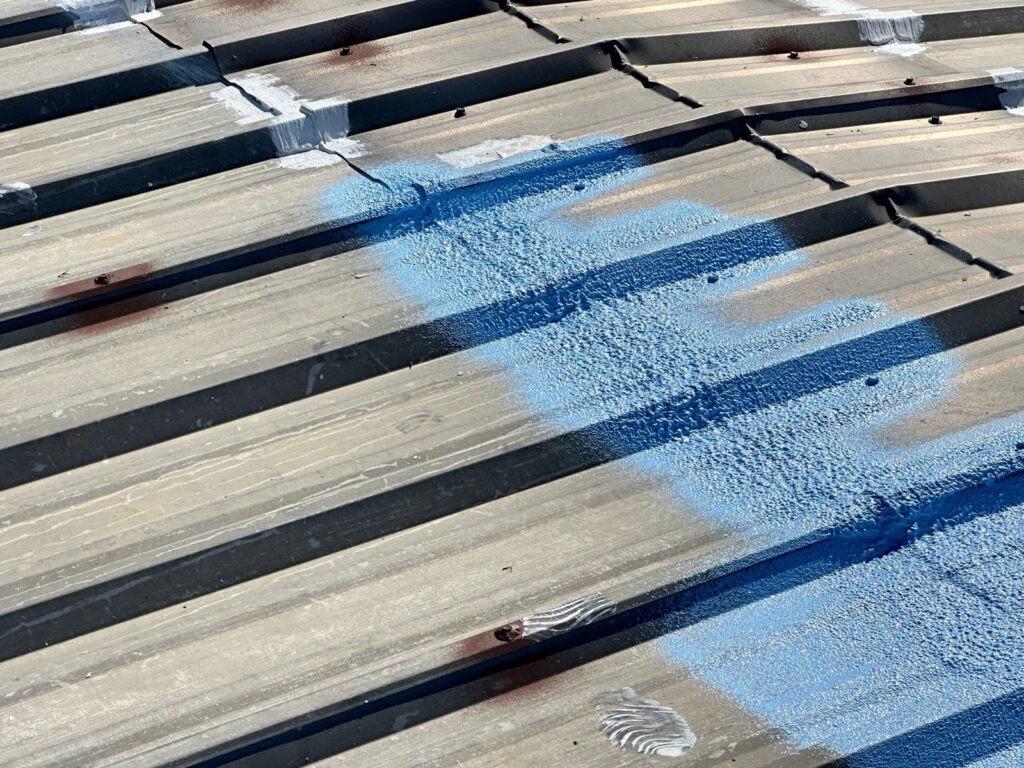
4. Seam, Fastener, and Penetration Repairs
Many commercial roof leaks originate at vulnerable roofing details.
Before coating the main roof surface, we address the necessary repairs and detail work.
Depending on the roofing system, this may include:
- Metal panel seams and overlaps.
- Exposed fasteners.
- Roof penetrations.
- Flashing transitions.
- Rooftop equipment curbs.
- Other identified leak-prone areas.
These locations may require specialized sealants, reinforcing materials, fastener repairs, or other corrective work.
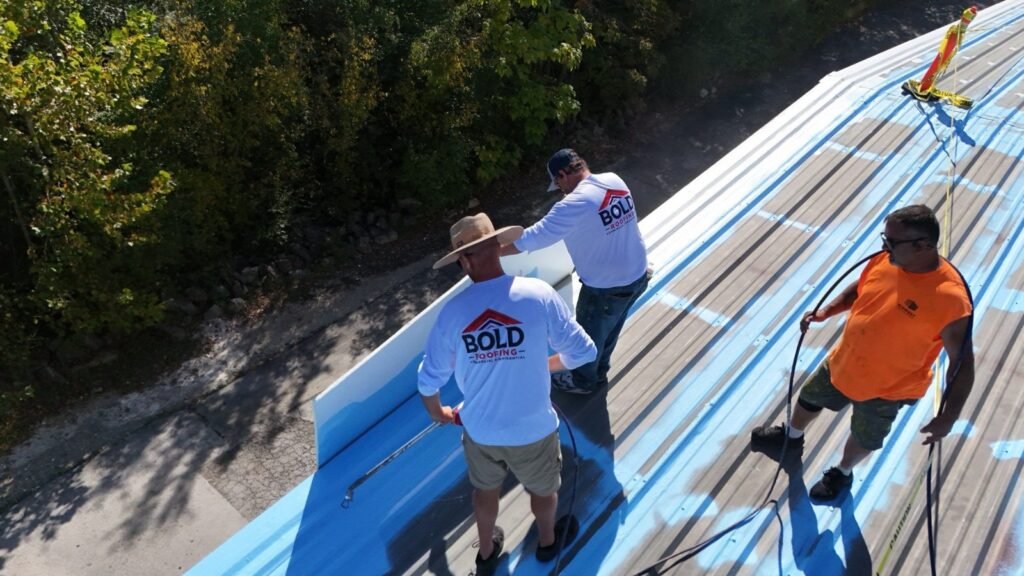
5. Basecoat Application
Once preparation and detail work are complete, we install the specified coating system.
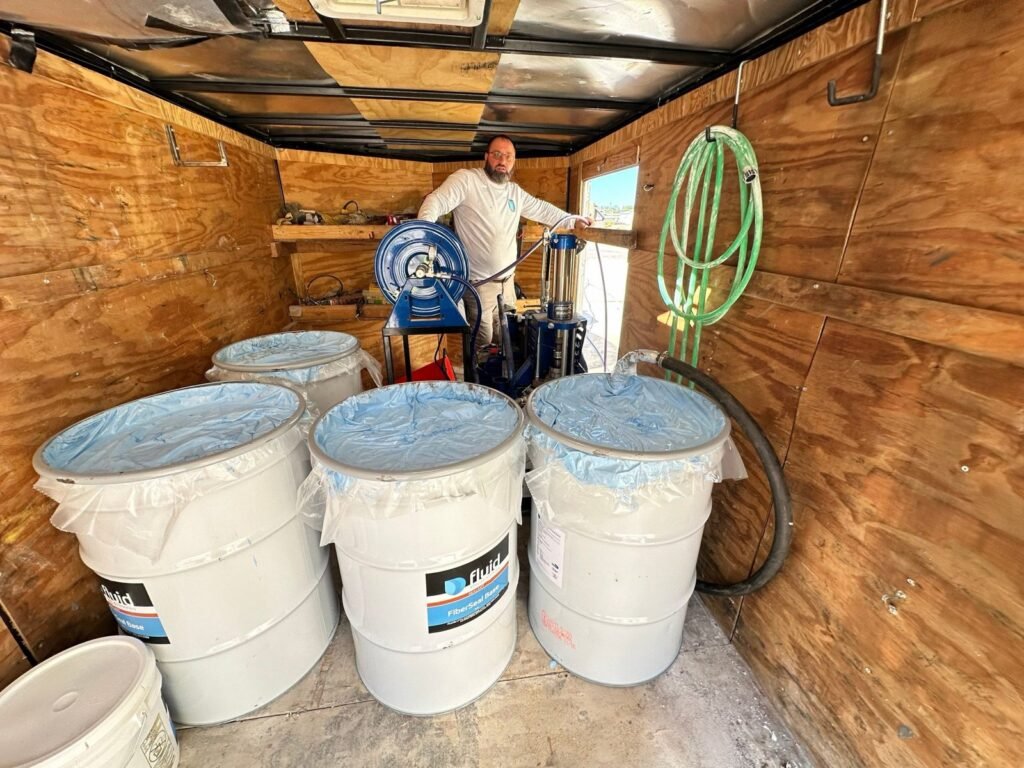
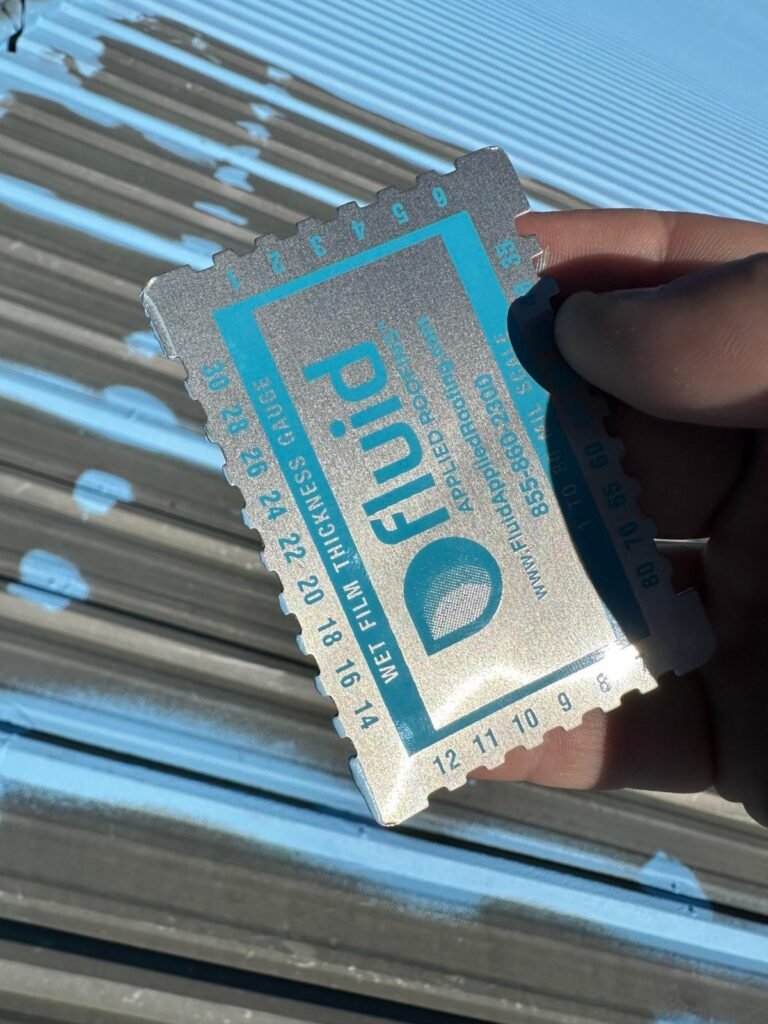
Where the system requires a basecoat, it is applied at the manufacturer’s prescribed coverage rate and thickness.
Using the correct material quantities and application methods is essential to system performance.
6. Protective Finish Coat
Where specified, the finish coat provides UV resistance and protection for the underlying restoration system.
Think of it like sunscreen for your commercial roof.
The outer coating helps protect the roofing assembly from sunlight, weathering, and environmental exposure.
The entire coating system must meet the manufacturer’s installation requirements—not simply look good when the job is finished.
7. Final Inspection and Warranty Documentation
We review the completed restoration and applicable installation requirements.
We also provide the relevant warranty information so the property owner understands the coverage associated with the project.
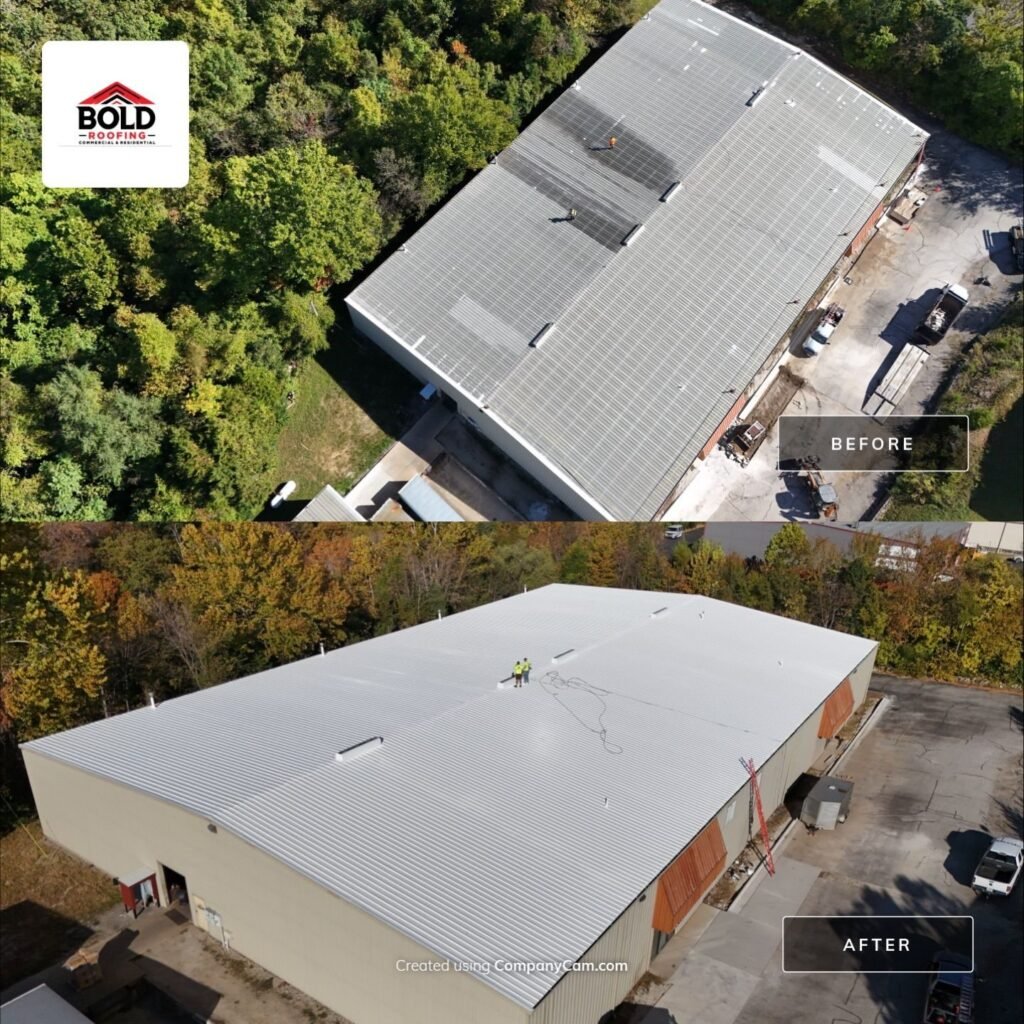
Featured Commercial Project: Industrial Warehouse Roof Restoration in Hollister, Missouri
A Large-Scale Metal Roof Restoration for Two Industrial Warehouses
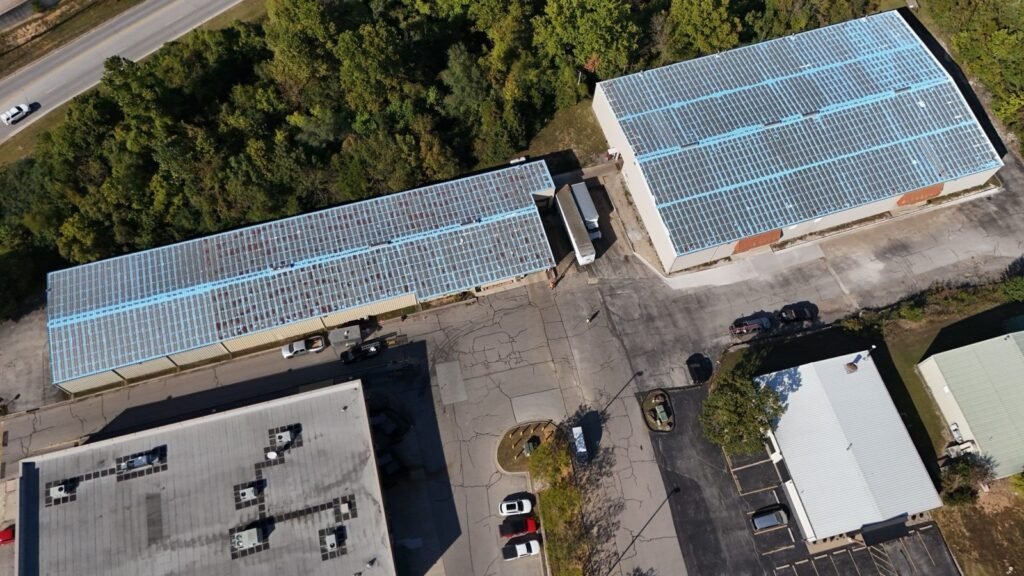
One example of Bold Roofing’s commercial restoration work involved two industrial warehouses in Hollister, Missouri, used to store marketing materials for a major Branson-area entertainment company.
The buildings had approximately 119,000 square feet of exposed-fastener metal roofing.
Although the existing roofs had developed numerous leaks and some surface rust, the roofing systems were suitable candidates for restoration.
The Challenge
The buildings were experiencing leaks in multiple locations.
Like many aging exposed-fastener metal roofs, the roofing systems had areas vulnerable to water intrusion, along with weathered surfaces and minor corrosion.
The property needed an effective roofing solution without the significant expense and disruption of replacing such a large amount of metal roofing.
The Restoration
Bold Roofing installed a Fluid Applied Roofing (FAR) acrylic restoration system.
The work addressed the necessary roofing details and provided a protective coating over the existing metal roofing.
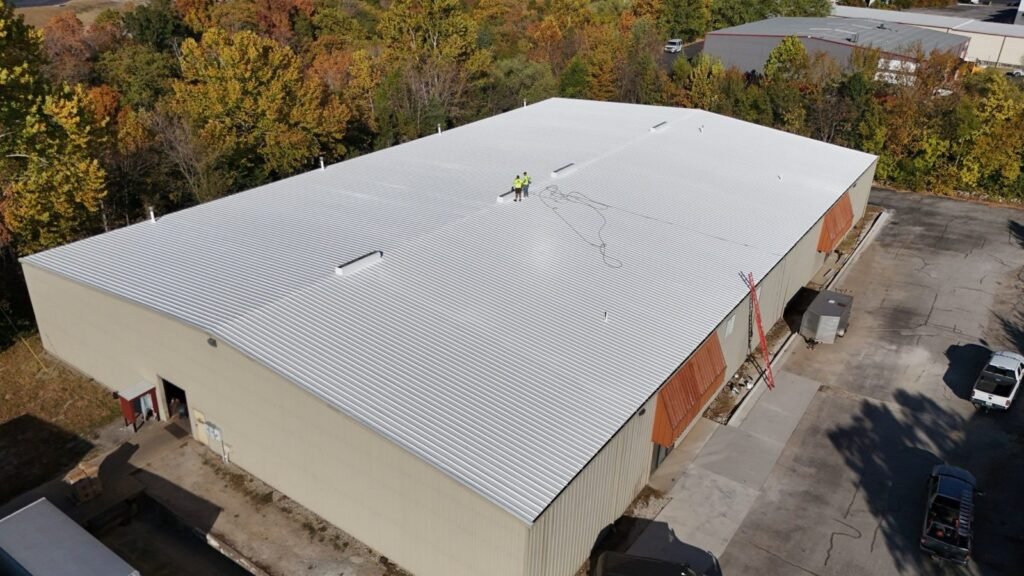
The completed project included a 20-year manufacturer warranty, subject to the manufacturer’s terms.
The reported roof leaks were resolved, and the customers were extremely pleased with the completed work.
A Remarkable Roof Surface Temperature Difference
During the summer, we observed a substantial temperature difference between the original uncoated metal roof surface and the reflective coated surface.
Uncoated Metal Roof Surface: Approximately 147°F
Reflective Coated Roof Surface: Approximately 88°F
That’s a reported difference of roughly 59°F at the roof surface.
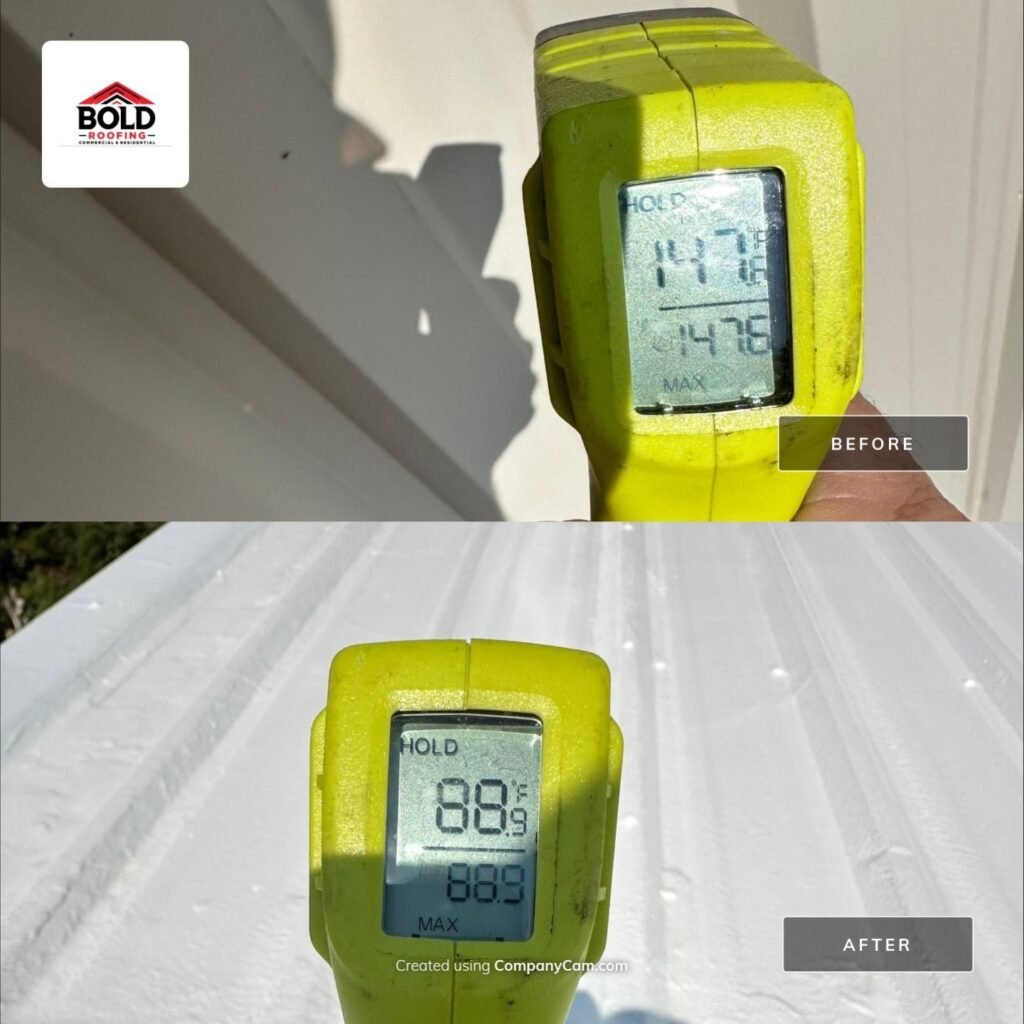
It’s important to distinguish roof surface temperature from indoor air temperature.
Because these warehouses frequently had large doors open, we did not obtain reliable measurements showing how much the coating affected interior temperatures or utility costs.
However, the surface readings demonstrate the potential for reflective coatings to substantially reduce solar heat absorption at the roof surface.
Project Highlights
- Location: Hollister, Missouri
- Property: Two industrial storage warehouses
- Roof area: Approximately 119,000 square feet
- Existing system: Exposed-fastener metal roofing
- Primary concerns: Multiple leaks, weathering, surface rust, and high roof temperatures
- Restoration: FAR acrylic fluid-applied coating system
- Manufacturer warranty: 20 years
- Outcome: Reported leaks resolved and substantially lower observed roof surface temperature
This is one example of our commercial roofing and restoration work. Project results vary based on the existing roof, coating system, installation conditions, and building characteristics.
Commercial Roof Restoration vs. Complete Replacement
One of the biggest questions commercial property owners ask is whether restoration makes financial sense compared with replacement.
The answer depends primarily on the condition of the existing roofing system.
When a roof is structurally sound and suitable for restoration, a fluid-applied coating system may preserve the existing roofing assembly while addressing leaks and weathering.
Complete replacement, by contrast, may require extensive tear-off, disposal, new roofing materials, additional labor, and potentially greater disruption to business operations.
Potential Cost Comparison
In our experience, commercial roof restoration can often cost approximately 30–50% less than complete roof replacement on suitable projects.
| Estimated Replacement Cost | Illustrative Restoration Cost |
|---|---|
| $50,000 | $25,000–$35,000 |
| $100,000 | $50,000–$70,000 |
| $200,000 | $100,000–$140,000 |
| $500,000 | $250,000–$350,000 |
These figures illustrate the potential savings range and are not actual project estimates.
Restoration pricing depends on the roof’s size, existing condition, required repairs, coating materials, surface preparation, application specifications, access, and warranty requirements.
Some roofs require too much repair work to make restoration financially practical.
Others may not be appropriate for coating at all.
We’ll help you compare the available options before making a major roofing investment.
Cool Roof Coatings: Energy-Efficient Roofing for Commercial Buildings
A cool roof is a roof designed to reflect more sunlight and absorb less heat than a standard roof surface. On most existing commercial buildings, the most practical way to get a cool roof is a reflective, fluid-applied roof coating—the same restoration systems described on this page.
Large commercial buildings can absorb substantial solar heat through their roofs.
Metal roofing in particular can reach extremely high surface temperatures during Missouri summers.
A reflective roof coating may substantially reduce the amount of solar energy absorbed by the roof surface.
Depending on the building, this can help reduce heat transfer into the interior.
A cool roof’s performance is commonly described by two measurements: solar reflectance (how much sunlight the surface reflects) and thermal emittance (how effectively it releases the heat it does absorb). Many reflective roof coatings are tested and listed by the Cool Roof Rating Council (CRRC), and we can provide product data sheets for the system proposed for your building.
Potential Benefits of a Cool Roof Coating
- Lower roof surface temperatures: On our Hollister warehouse project, the roof surface dropped from about 147°F uncoated to about 88°F coated.
- Less heat entering the building: How much depends on insulation, ventilation, and how the building is used.
- Less strain on rooftop HVAC equipment: Particularly on buildings with limited roof insulation.
- Reduced thermal movement: Cooler metal roofs expand and contract less each day, which reduces stress on seams and fasteners.
- A clean, uniform, bright finish across the entire roof.
Some utilities and local programs have offered incentives for reflective roofing in the past. Availability changes, so check with your utility provider before your project.
For warehouses, manufacturing facilities, industrial buildings, and other commercial properties, reflective roof coatings may be worth evaluating when rooftop heat is a concern.
However, actual indoor temperature and energy savings depend on factors such as insulation, ventilation, HVAC operation, outdoor weather, building construction, and how the property is used.
We do not promise a particular reduction in interior temperatures or utility costs.
Commercial Roof Coatings and Tax Considerations
The financial benefits of commercial roof restoration may extend beyond the initial construction cost.
Depending on the specific work performed and the property owner’s tax circumstances, some roof restoration expenses may qualify for treatment as deductible repairs rather than capital improvements.
Other projects may need to be capitalized.
Commercial roof replacements may also qualify for depreciation or certain expensing provisions under applicable tax law.
Roof coatings are not automatically 100% deductible in the first year, and roof replacements are not automatically excluded from immediate tax deductions.
If tax planning is part of your decision, we recommend discussing the proposed scope with your CPA or tax adviser.
Bold Roofing can provide written construction documentation for your records, but we do not provide tax advice or guarantee any particular tax treatment.
Commercial Roof Coating Warranties
Many qualifying commercial roof coating systems offer manufacturer warranty options of 10, 15, or 20 years.
The available warranty depends on the manufacturer, existing roofing system, specified materials, application requirements, inspections, and other conditions.
Bold Roofing Workmanship Warranty
Bold Roofing provides a two-year workmanship warranty on our commercial roofing and roof coating installations.
This workmanship warranty is separate from any manufacturer warranty.
A 20-year manufacturer warranty does not mean 20 years of Bold Roofing workmanship coverage.
We explain the applicable warranty terms for each project so property owners understand their coverage.
Can a Commercial Roof Be Recoated Again in the Future?
One of the potential long-term advantages of fluid-applied roofing systems is that some can be maintained and recoated rather than completely replaced.
Years after the original restoration, a suitable coating system may be eligible for cleaning, necessary repairs, and another protective coating application.
In some cases, this can avoid repeating the full preparation and basecoat process from the original installation.
For large commercial roofs, that can represent significant future savings.
However, the roof must be evaluated before recoating. The existing coating, underlying roof, adhesion, moisture conditions, and manufacturer requirements all affect whether recoating is appropriate.
Commercial Properties We Serve
Bold Roofing provides commercial roof coating and restoration services for a wide range of properties.
Warehouses and Distribution Centers
Large metal and low-slope roofs can develop leaks around seams, fasteners, and rooftop penetrations. Restoration may offer an alternative to extensive roof replacement.
Manufacturing and Industrial Facilities
Industrial properties often require practical roofing solutions that protect the building while minimizing interruptions to daily operations.
Churches and Religious Facilities
For churches with large roof areas, restoration may offer an opportunity to address roofing problems while preserving funds for other priorities.
Schools and Educational Buildings
We evaluate suitable institutional roofing systems for restoration options based on their condition, construction, and maintenance needs.
Retail Centers and Strip Malls
A leaking commercial roof can affect multiple tenants. Properly planned restoration may help protect occupied spaces while reducing the disruption associated with complete replacement.
Hotels and Resorts
Hospitality properties need roofing solutions that account for guests, ongoing operations, and building access.
Commercial Property Managers
For owners and managers responsible for multiple buildings, we can evaluate roofing conditions and discuss restoration versus replacement options on a property-by-property basis.
Project Sizes
We generally focus on commercial roofs of 5,000 square feet or larger, with a preference for projects of 10,000 square feet and above.
Our commercial roofing and restoration work encompasses different property types, roofing systems, and project scopes—from targeted restoration work to large industrial coating applications.
Commercial Roof Coatings in Branson, Springfield, and Beyond
Bold Roofing is locally based in the Branson area and serves commercial properties throughout southwest Missouri.
Our primary service area includes:
Branson, Hollister, Springfield, Ozark, Nixa, Republic, Branson West, Kimberling City, and surrounding communities.
For larger commercial roofing and restoration projects, our service territory extends beyond our normal residential roofing area.
We also consider qualifying projects throughout:
- Joplin and southwest Missouri
- Kansas City and other Missouri markets
- Northwest Arkansas
- Tulsa and northeastern Oklahoma
- Other locations throughout Missouri
If your commercial property is outside our immediate service area, contact us with the building location, approximate roof size, and roofing concerns.
Travel and project availability depend on the size and scope of the work.
Frequently Asked Questions About Commercial Roof Coatings
What is a cool roof coating?
A cool roof coating is a reflective, fluid-applied coating that lowers the roof’s surface temperature by reflecting sunlight and releasing absorbed heat. On commercial buildings, cool roof coatings are typically installed as part of a complete roof restoration system that also addresses seams, fasteners, and penetrations.
Are commercial roof coatings worth it?
They can be an excellent investment when the existing roofing system is suitable for restoration. A properly designed coating system may address leaks, protect the roof, and extend service life for substantially less than complete replacement. However, severely deteriorated or moisture-saturated roofs may require replacement.
Can you coat a rusty metal roof?
Sometimes. Metal roofs with limited surface rust may qualify for restoration after proper preparation, corrosion treatment, repairs, and any required primer. Severely corroded panels or compromised metal may need to be replaced.
Will a roof coating stop leaks?
A properly designed coating restoration system can resolve leaks associated with suitable roofing surfaces, seams, fasteners, and penetrations. However, the source of each leak must be investigated, and necessary repairs must be completed. Simply applying coating over an existing leak is not a reliable solution.
How much does commercial roof coating cost?
Pricing depends on roof size, substrate, condition, preparation, repairs, coating selection, required material quantities, and warranty specifications. For many suitable projects, restoration may cost approximately 30–50% less than complete replacement. A roof assessment is necessary to develop a meaningful estimate.
Is silicone or acrylic better for a commercial roof?
Acrylic coatings are often well suited to compatible roofs with positive drainage. Certain silicone systems may be preferable for very low-slope roofs with challenging water exposure. Neither material is universally better; the correct system depends on the existing roof and manufacturer requirements.
Can you coat a TPO roof?
Some TPO roofing membranes can be restored with compatible, manufacturer-approved coating systems. Proper cleaning, adhesion testing, primer selection, and membrane condition are important.
Can you coat an EPDM rubber roof?
Certain EPDM roofs may qualify for restoration using compatible coating systems. EPDM requires particular attention to adhesion and manufacturer-approved preparation methods.
Can a modified bitumen roof be coated?
Yes, some modified bitumen roofs can be restored when the existing membrane is sound, dry, and compatible with the selected coating system.
Can a commercial roof coating reduce energy bills?
Reflective coatings may reduce solar heat absorption and heat transfer into a building. Actual energy savings depend on insulation, HVAC, ventilation, climate, and building operations. We do not guarantee a specific reduction in utility costs.
How long do commercial roof coatings last?
Service life depends on the coating system, existing roof, installation quality, weather exposure, and maintenance. Qualifying systems commonly offer manufacturer warranty options of 10, 15, or 20 years. Warranty duration does not guarantee a maintenance-free roof.
Do you have to remove the old roof before applying a coating?
Not always. One of the main benefits of restoration is the ability to preserve a suitable existing roof. However, damaged or saturated areas may require repair or removal, and some roofs are not candidates for coating.
What happens if moisture is trapped beneath the existing roof?
Widespread trapped moisture can make a roof unsuitable for coating. Applying a coating over saturated materials may conceal or worsen underlying problems. Moisture concerns should be investigated before restoration is recommended.
Are commercial roof coatings tax-deductible?
Some coating work may qualify as a deductible repair, while other work may need to be capitalized. Roof replacements can also qualify for depreciation or certain expensing provisions. Consult a qualified tax adviser regarding your specific project.
Can a coated commercial roof be recoated later?
Potentially. Many fluid-applied systems can be evaluated for future maintenance recoating. The roof must still be in suitable condition, and necessary cleaning, repairs, and preparation may be required.
What warranty does Bold Roofing provide?
Bold Roofing provides a two-year workmanship warranty on commercial roofing and roof coating installations. Qualifying coating systems may also include separate manufacturer warranty options of 10, 15, or 20 years, depending on the project and product specifications.
What size commercial roof projects do you accept?
We generally evaluate projects starting around 5,000 square feet, with particular interest in commercial roofs of 10,000 square feet or larger. We also consider larger industrial and multi-building restoration projects.
Do you travel outside Branson and Springfield?
Yes. For qualifying larger commercial projects, Bold Roofing can consider work throughout Missouri, including Joplin and Kansas City, as well as northwest Arkansas and the Tulsa region.
How do I know whether my commercial roof should be restored or replaced?
The best starting point is a professional inspection. We evaluate the existing roof, investigate leak sources and moisture concerns, and determine whether a compatible restoration system is a practical option. If replacement makes more sense, we’ll explain why.
Before You Replace Your Commercial Roof, Talk to Bold Roofing
A leaking or aging commercial roof doesn’t automatically mean you need to spend hundreds of thousands of dollars on a complete replacement.
Depending on its condition, your existing roof may be a candidate for a professional fluid-applied restoration system that addresses leaks, protects against weathering, and extends its useful life.
At Bold Roofing, we work with a variety of commercial roofing systems and property types. We understand the importance of making sound financial decisions while protecting your building, equipment, inventory, tenants, and operations.
We’ll evaluate your roof, explain the available options, and help you determine whether restoration or replacement is the better investment.
Your Commercial Roof May Not Need to Be Replaced. It May Need to Be Restored.
Request a Commercial Roof Restoration Assessment
Call or Text: 417-222-7535
Bold Roofing — Branson, Missouri
Serving Springfield, southwest Missouri, and qualifying larger commercial projects throughout Missouri and the surrounding region.